Moitessier, Warrior & Me
6 March 2026
It didn’t take me long to come up with a name for the company.
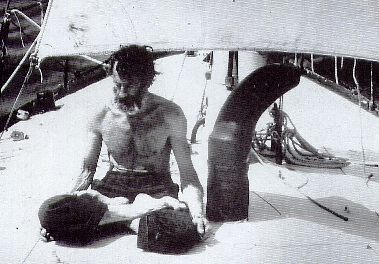
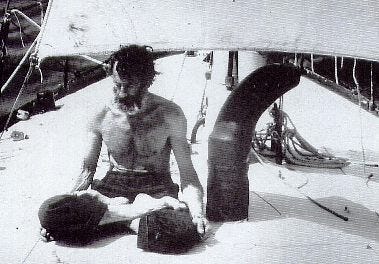
In 1968, Bernard Moitessier was on course to win the first non-stop solo circumnavigation of the globe, but then he kept sailing. In his book The Long Way (originally La Longue Route), Moitessier recounts his extraordinary voyage in the 1968 Golden Globe Race and, more importantly, his decision not to finish it. After months alone at sea, he came to see racing as increasingly meaningless. The fame awaiting him on arrival felt hollow compared to the freedom and clarity he had discovered at sea. He felt at home in the wilderness. Rather than return to Europe to claim his prize, he continued sailing, eventually reaching Tahiti after nearly completing a second circumnavigation. He announced his withdrawal by passing a message to a ship, explaining that he was continuing “because I am happy at sea and perhaps also to save my soul.”
Thanks for reading! Subscribe for free to receive new posts and support my work.
Now that I had the name, it was time to start looking for a company boat. I had played with the idea of using Floortje, but with just two sellable bunks it I could hardly run a viable business on her. I figured I needed a boat with at least six guest bunks. I also wanted a boat that was fast and fun to sail. And, most importantly, it had to be safe. I didn’t have the money to buy anything resembling new, so I knew I’d be looking at an older boat - yet one that was well maintained. Oh, and it would also have to be a South African yacht, to support my business visa application. In other words, I was looking for a unicorn.
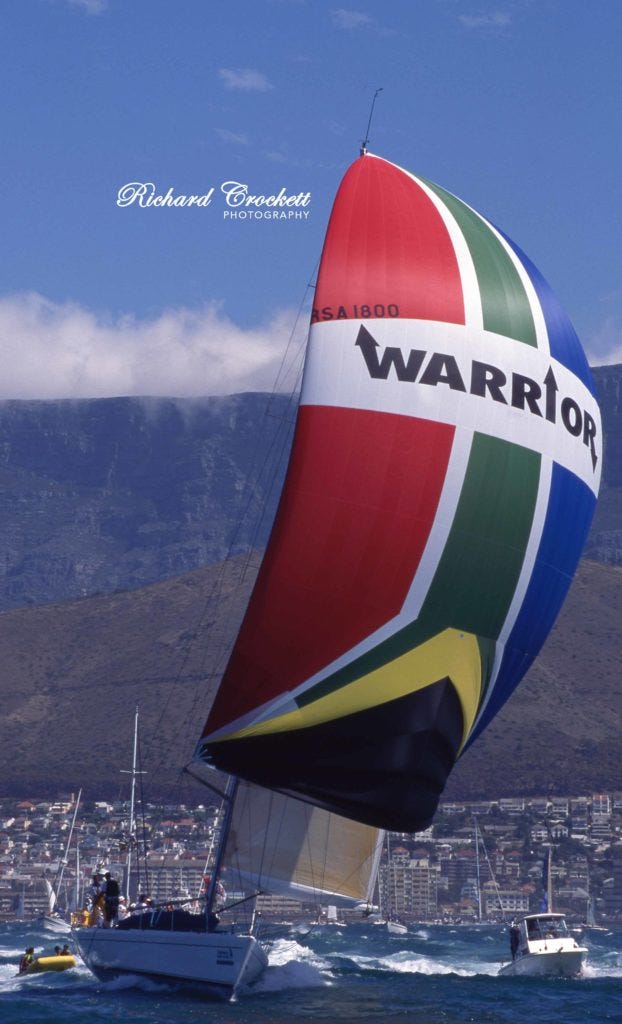
I had no expectations, then, when on a grey office day - a week after returning from Botswana - I went on yachtworld.com and clicked the filters: Type: racer/cruiser; Length: > 55 feet; Location: South Africa. But there she was, at the top of the results list. A 63-foot ocean racer called Warrior, designed by Simonis Voogd and built by Robertson and Caine in 1995 to win the Cape to Rio Race, which she did the following year. She was still owned by her first owner, and the listing said she had been maintained professionally throughout her life. From the pictures, that was evident. Two weeks later I was on a flight to Cape Town.
Upon inspection, my enthusiasm only grew. This was exactly the type of boat I was looking for. She was big enough to sleep six to eight guests, yet small enough to handle with a small crew. She was fast and light enough to race, but comfortable enough to cruise. Not a dark, carbon-fibre torture chamber, but rather a gentleman’s racing yacht.
Over dinner, the owner - a businessman in his late eighties - told me the design was based on a Whitbread 60, but that he had insisted on a spacious owner’s cabin with a double bunk. His crew hadn’t liked it because it made the boat less competitive, but for me it was perfect. If I were to spend months at sea with strangers, a bit of privacy was not unwanted. I could tell that the owner liked my plans for the boat. He seemed more concerned with the boat’s future and her legacy, than with the price.
A week after I returned to Amsterdam - I had promised myself not to act too impulsively - I made him an offer that was well below asking price, but with the assertion that I would look after his baby well. The next day I received an email from the broker: the owner had accepted. Now there was no way back.
Was I moving too fast? The idea had surfaced in late August and here I was in mid-October, about to buy a 30-year old 60-footer and take the biggest risk of my life. Was this genuinely a good plan or was I being impulsive - once again running away from something?
I shared my thoughts with Maud, who said that impulsiveness isn’t necessarily bad, as long as it isn’t destructive. Was I being destructive? I didn’t think so. Was I running away? Perhaps a little. But mainly I was running towards something. It was the excitement about what was coming, rather than the fear of what I would leave behind, that was driving me. I was pursuing this because I was happy in the wilderness; not to save my soul.
With that realisation came peace of mind, and the confidence to share my plans with the people around me. I expected to hear that I had completely lost the plot, but instead no one seemed surprised. My parents said the sensible things that parents say, but they were not opposed. Most of my friends remarked that they had been far more surprised when, six months before, I had told them I was going to work for a bank. My cousin Guus wasn’t surprised either. A year earlier he had predicted that I wouldn’t stay in Amsterdam for more than a year. He has always known me well.
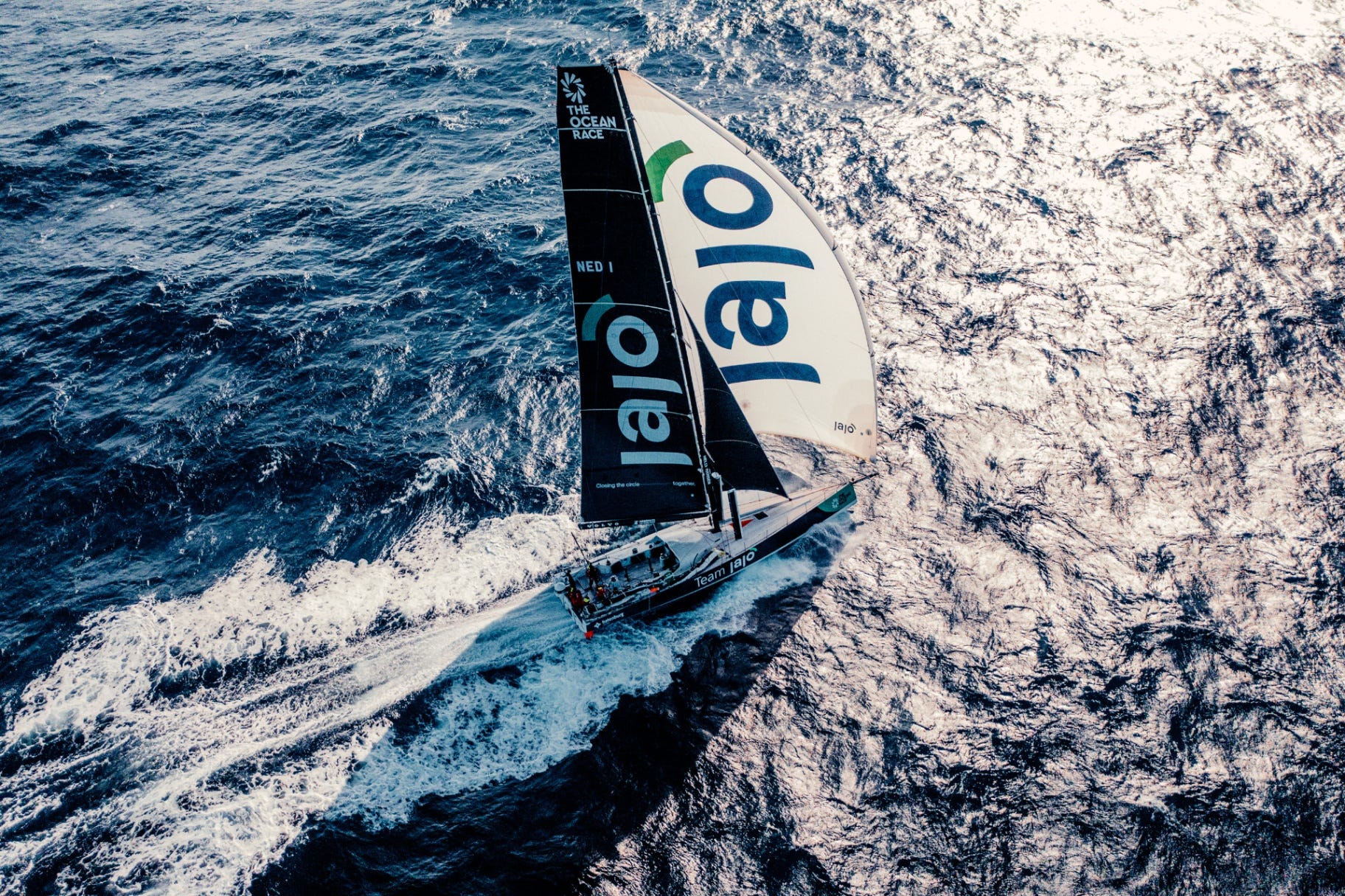
Two months laterI am writing this on a flight to St Maarten, where I will board the VO65 Team JAJO (formerly Brunel) to crew in the Caribbean before helping sail her back across the Atlantic. An exciting trip on an incredible boat and good preparation for what’s ahead on Warrior.
I leave Cape Town feeling proud of the progress made over the past two months. I've made friends, sailed a lot, taken on my first clients, and earned my Yachtmaster Offshore. I even improved my yoga, although I'm not nearly as flexible as Moitessier yet. More importantly, The Long Way is no longer a one-man show. I have my first employee, and he is exceptional. His name is Asenathi and he is a two-time Olympian sailor. His story deserves its own post.
Thanks for reading! Subscribe for free to receive new posts and support my work.
Originally published at the source. Subscribe for new stories.