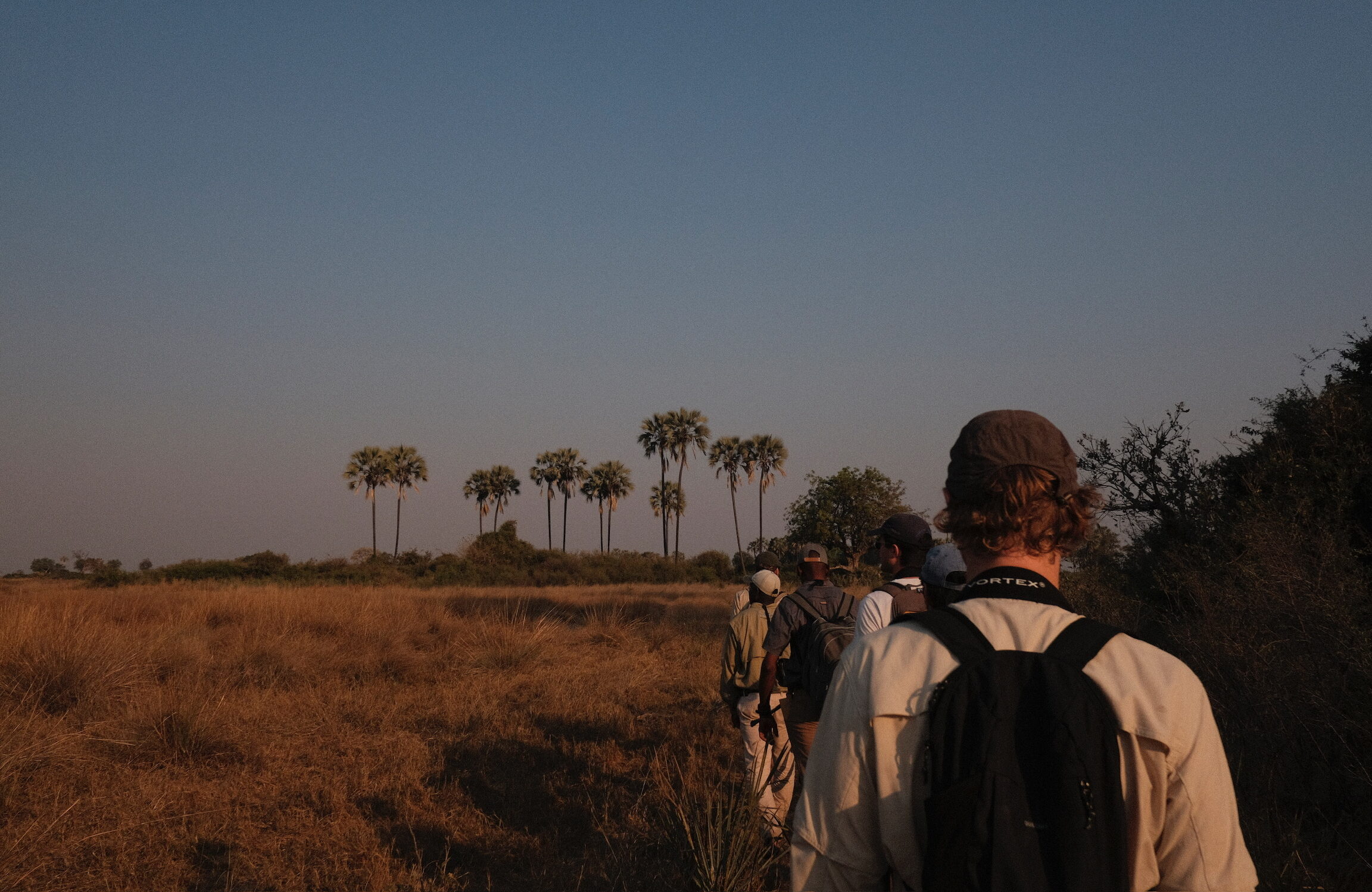
Okavango walking safari
Seven nights in the Delta at peak flood — on foot and by mokoro, from a camp on Chief's Island. Wilderness accessible to almost no one, explored the oldest way there is.
Reserve a place- Dates
- 24 – 31 Aug 2026
- Where
- Xaxaba, Chief's Island
- Nights
- 7, under canvas
- Moving
- On foot & by mokoro
- Group
- Small, hand-picked
- From
- €4,900 · incl VAT
The Okavango never reaches the sea. Its waters spread, slow, and disappear into the sand.
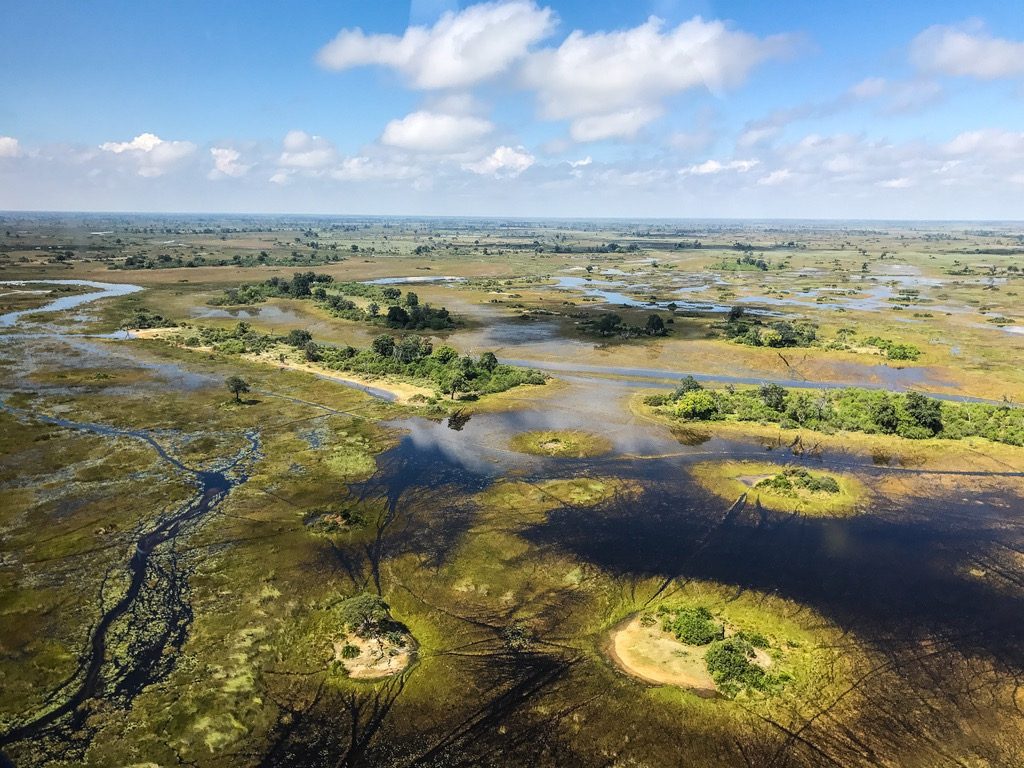
The flood arrives in the dry season
Fed by floods that leave the Angolan highlands and take half a year to arrive, the Delta is at its fullest in the dry winter months — exactly when we're there. At peak flood it covers some 15,000 square kilometres of channels, lagoons and islands.
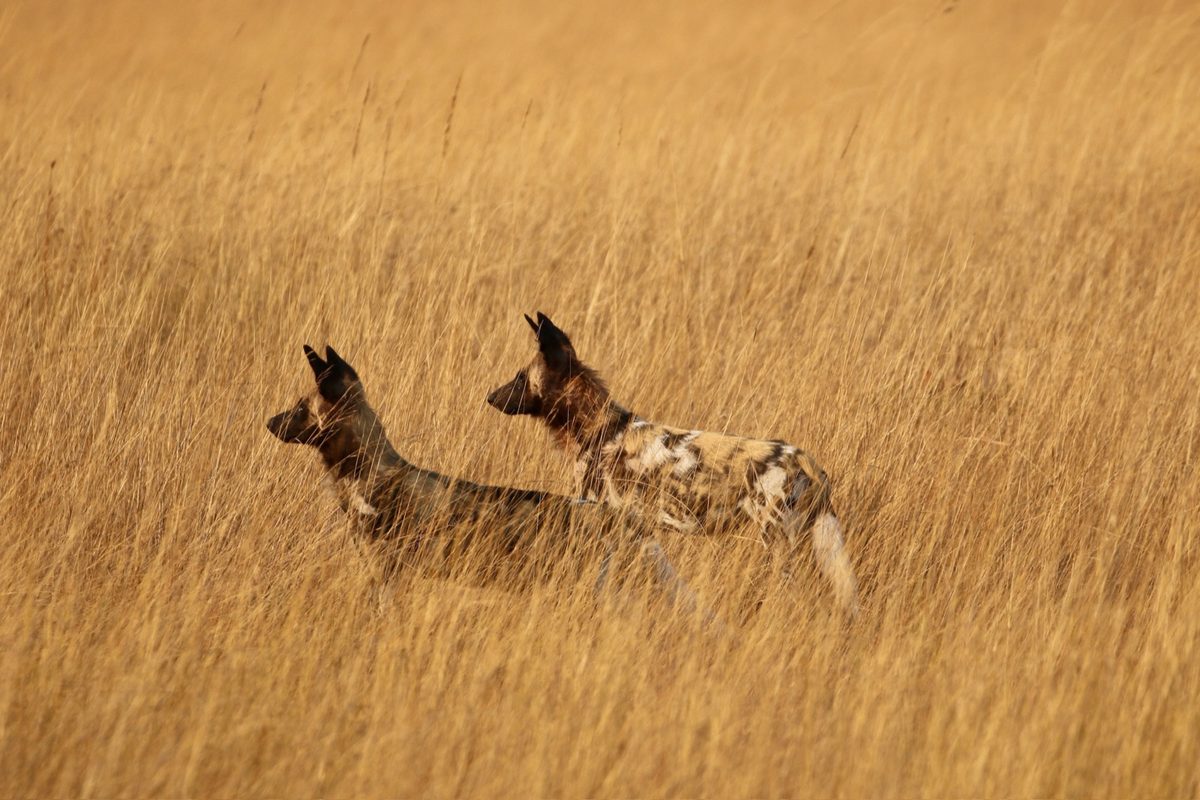
Big game, met on foot
The Delta draws in some of the largest elephant herds left on earth, along with lion, African wild dog, and creatures found almost nowhere else: the swamp-adapted sitatunga, the elusive Pel's fishing owl. You meet it the oldest way there is — slowly, quietly, downwind.
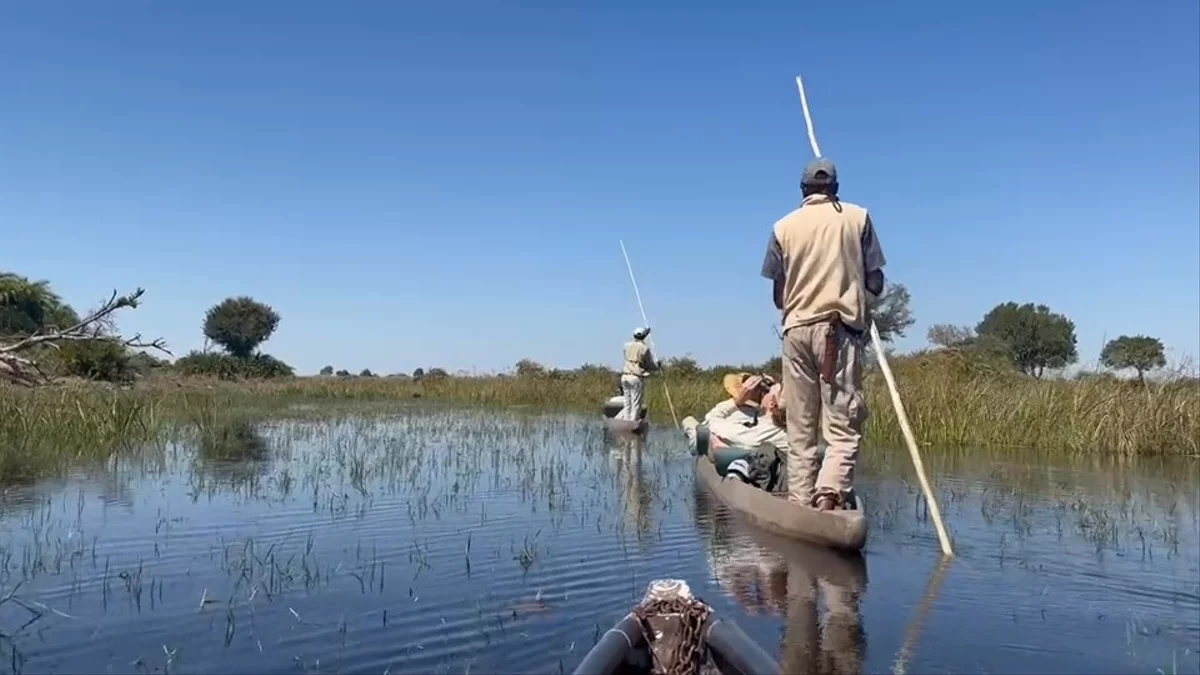
Poled, not paddled
Between the walks you travel as the Delta has always been travelled — by mokoro, poled in silence through the papyrus channels at water level. Remote, largely untouched and protected as a UNESCO World Heritage Site, this is one of the world's last true wilderness areas. Exploring it without encountering another person is a privilege accessible to few.
Where you’ll be
You fly via Johannesburg to Maun — every transfer beyond it is ours.
19.53° S · 23.17° E — Chief's Island, Okavango Delta
The trail
- 01Into camp at Xaxaba, on Chief's Island — en-suite tents, the Delta on every side.
- 02Mornings on foot through woodland, open plains and island systems shaped by the flood.
- 03By mokoro through the channels — the Delta at water level, poled in silence.
- 04The details of the bush: birds, tracks and trees — and big game, approached on foot when conditions allow.
- 05Evenings back in camp: a hot shower, cold drinks, excellent food, a fire.
- 06And if you choose it — we recommend you do — a sleepout: one night under the stars, standing watch by the fire.
A rough shape, not a timetable. The bush keeps the pace.
1 / 10
Trail life, shared
You don't come here to be driven past the wild. You come to walk into it.
What's asked of you
- Walk quietly, in single file, at the guides' word
- Be up early — the bush belongs to the first hours
- Carry your daypack and your water
- Stand a turn on watch, if you join the sleepout
What you'll learn
- To read the small details of the bush — birds, tracks, trees
- How wildlife is approached on foot, slowly and downwind
- The rhythm of the Delta: water, island, fire, stars
You walk with highly experienced guides who have spent their lives in this landscape — they read the bush long before you see what they've seen. A comprehensive first-aid kit is carried at all times, and there is reliable radio contact for emergencies.
‘One of the most unique experiences I have ever had in my life. It helped me think through numerous personal considerations, using nature as a guide.’
Mees · Okavango, 2025
The camp
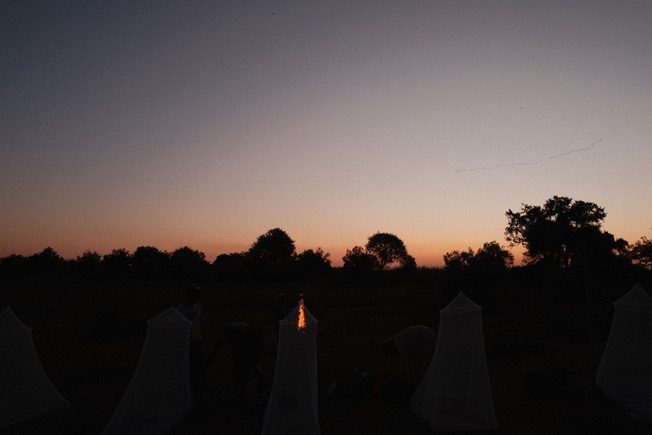
Xaxaba · en-suite Sahara tents · private chef
Simple, and exactly enough. En-suite Sahara tents, hot showers, cold drinks, and all food prepared by a private chef — the tents are simple yet comfortable, providing all the luxury you need in the bush. For those who want to go a step further, we offer (and recommend) a sleepout: a night under the stars, around a fire, with the chance to experience the magic of standing watch in the African bush.
Your guides
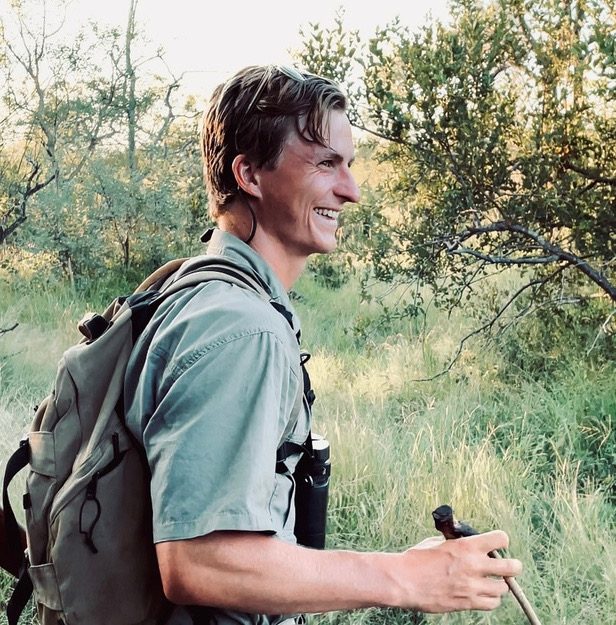
Willem van Liemt
Founder · FGASA Lead Trails Guide
At seventeen I travelled to Africa for the first time, on a professional field-guide course. Once in the bush I knew I'd spend my life working with nature. Countless hours on foot and hundreds of big-game encounters later, I'm a FGASA-qualified Lead Trails Guide — and The Long Way is what I left my desk to build. This is where I'm happiest: out at sea, or in the bush. On foot, of course.
FGASA Lead Trails Guide · Tracking & Trailing Level 3
Advanced Rifle Handling · Advanced Birding
MSc Conservation · Dutch · English
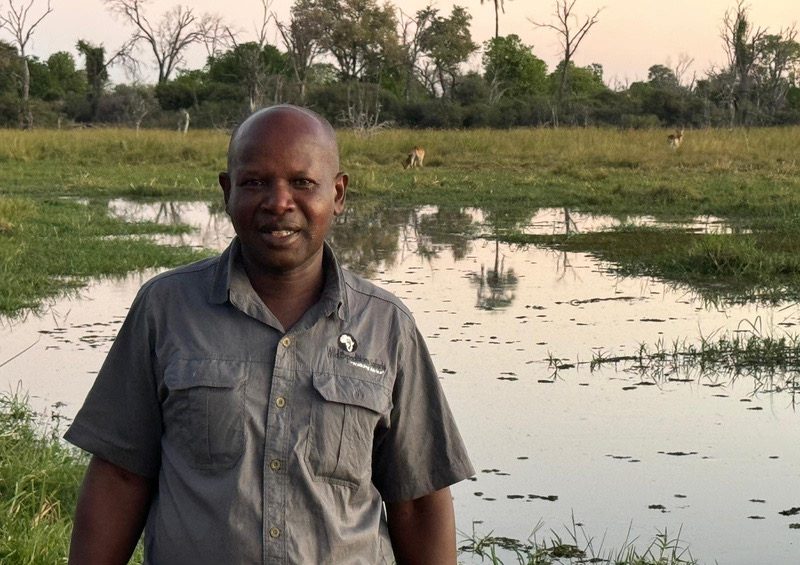
Okwa Sarefo
Professional guide · certified tracker
Born in a small village in the heart of the Okavango, Okwa learned to pole a mokoro by the age of eight. A professional guide since 1996, he brings over thirty years in Botswana's safari industry, holds the country's highest guiding qualification, and is a certified tracker. The Delta is not a place he knows — it's home.
Botswana's highest guiding qualification · Certified tracker
Setswana · English
Willem reads every message that comes in himself, and chooses the people on every expedition personally. willem@thelongway.earth
What's included
Included
- En-suite Sahara tents
- All food & beverages, prepared by a private chef
- Two highly experienced guides
- Flights from Maun into the Delta and back
- All internal transfers
- Concession fees
- €1 per walked kilometre to conservation — ±€50 on this safari
Not included
- International flights to Maun
Our pledge
By going the long way,
you contribute to conservation.
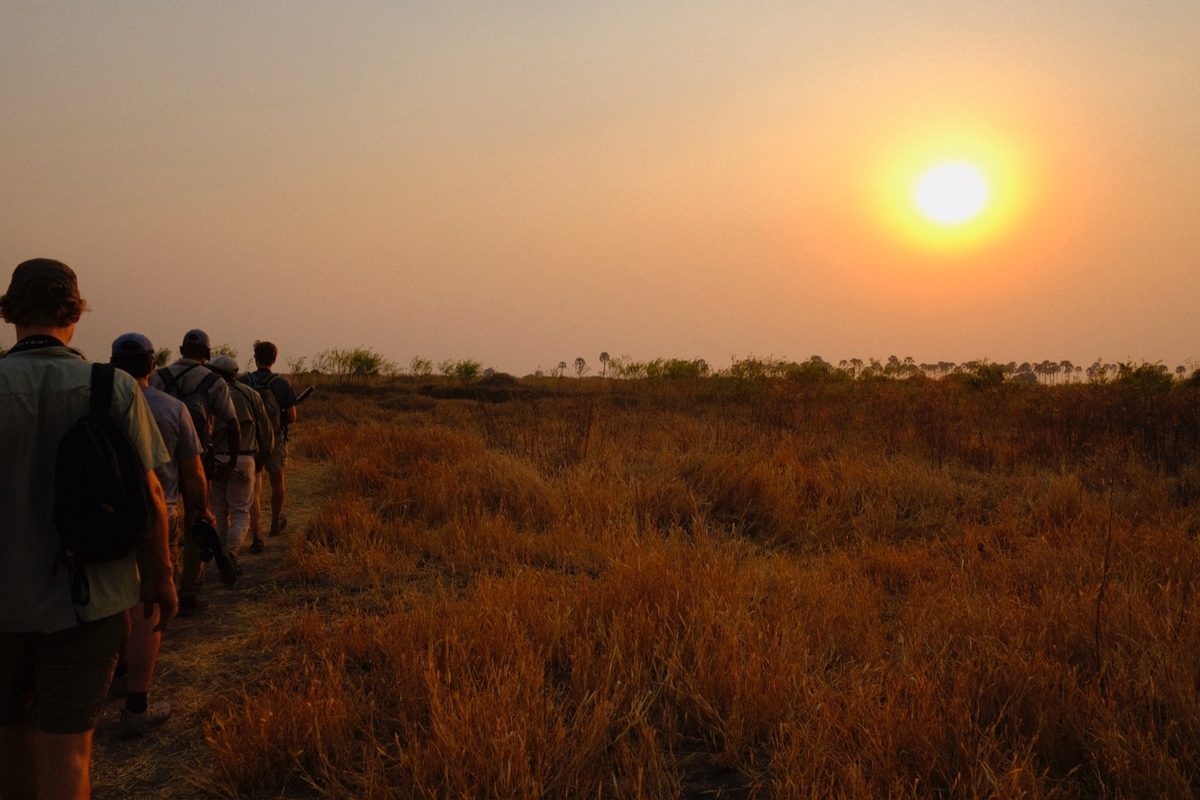
Every kilometre we walk gives back to the Delta — it's built into the price, and into the point.
€1 per kilometre walked · €0.10 per nautical mile sailed
What to pack
August is late winter in Botswana. Conditions are mild, sunny and dry, with real swings between day and night. Rain is extremely rare.
Bring
- Backpack (15–25 L)
- Walking shoes, already worn in
- Neutral-coloured clothing
- Hat and sunglasses
- Fleece jacket and thermal layers
- Beanie and gaiters
- Sunscreen, toothbrush and toothpaste
- Water bottles or Camelbak
- Head torch
- Binoculars
Optional, worth the weight
- Flip-flops
- Camera
- Journal and pen
- For the sleepout: sleeping bag, winter weight
- For the sleepout: blow-up pillow
- For the sleepout: microfibre towel
The full list travels with you — Trip notes — PDF, 7 MB.
Before you go
- How do I get there?
- You fly to Maun via Johannesburg; every internal transfer from there is ours, and included.
- Why August?
- The floodwaters take five to six months to come down from Angola, so the Delta is at its fullest in the dry winter — exactly when we're there.
- How fit do I need to be?
- You walk at the pace of the bush — slow, quiet, attentive — with time on the water by mokoro. Comfortable daily walking is enough.
- Is the sleepout required?
- No — offered, and warmly recommended. A night under the stars, around a fire, standing watch.
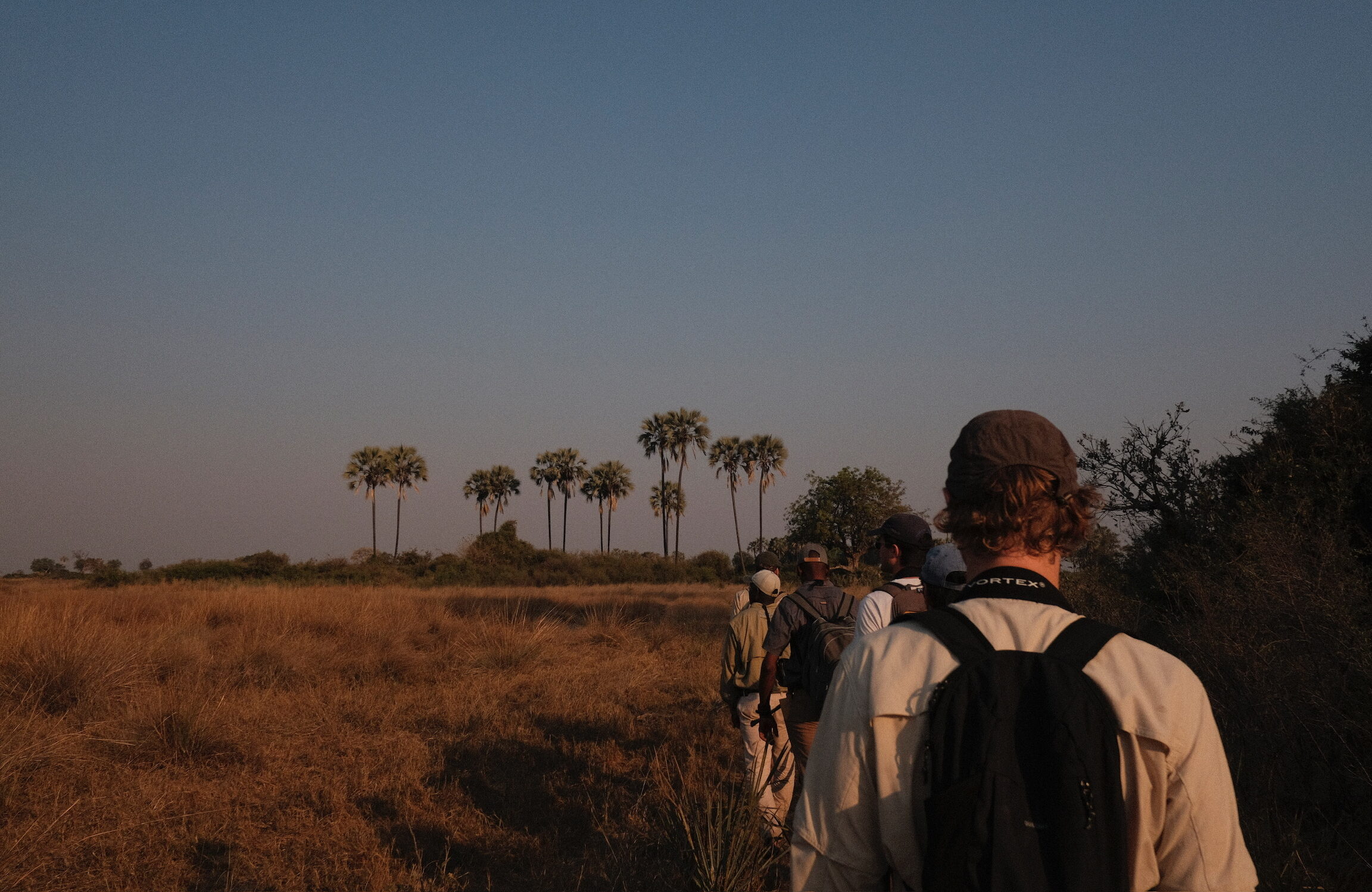
‘Five nights under the stars, walking through the bush, and exploring the Delta by boat. Being completely offline felt like a true luxury.’
Duco · Okavango
Reserve a place