Asenathi & Somoleze
20 mei 2026
Asenathi
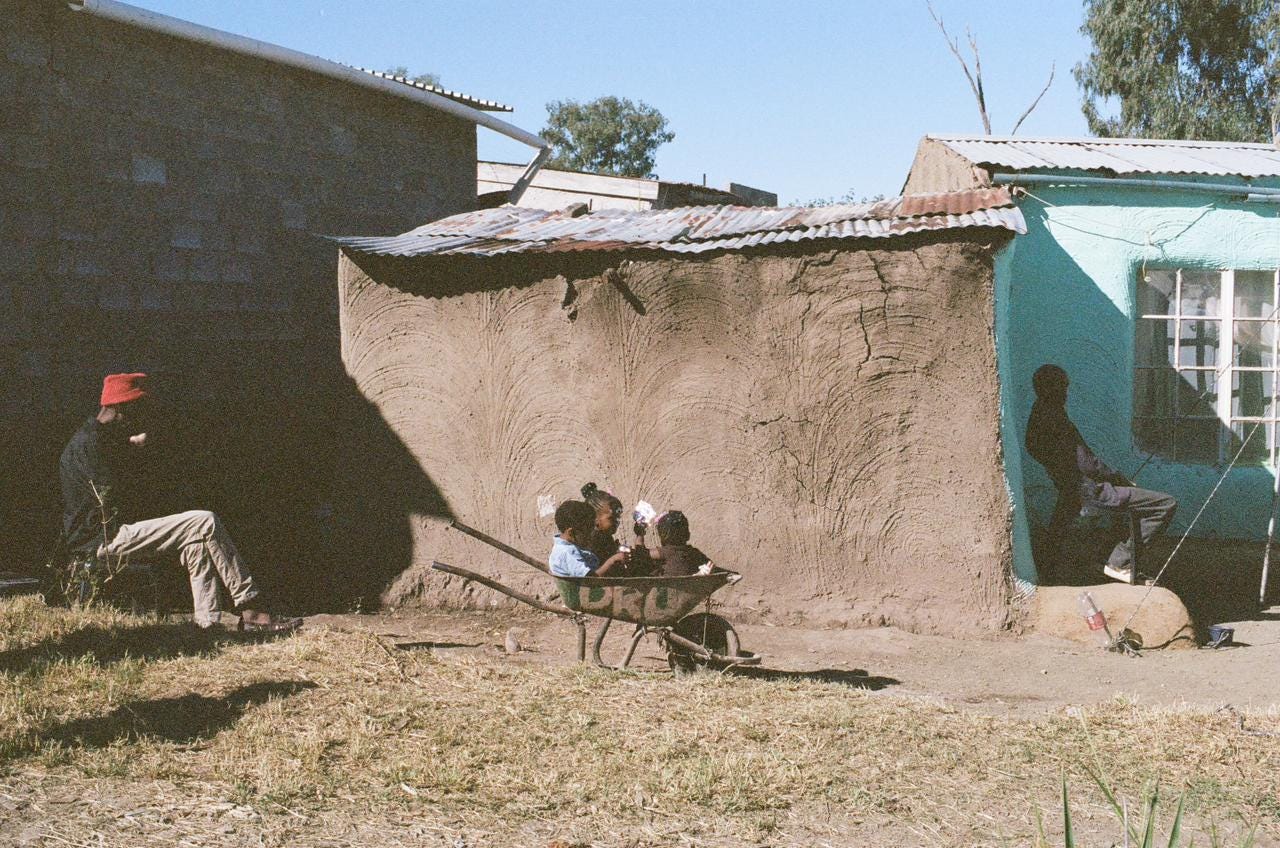
After a few months of naively thinking I could do everything myself, it was time to hire The Long Way’s first employee. Someone who could handle the daily maintenance of the boat. Asenathi was wildly overqualified for the job.
Arguably South Africa’s best sailor, Asenathi represented his country at the Olympic Games in London and Rio. That path was not obvious from the start. Asenathi grew up far from the sea, in the Eastern Cape settlement of Fort Beaufort. His grandparents had been forcibly relocated there by the apartheid regime, under the Bantustan Homeland Act. Along with millions of other black South Africans, they were removed from fertile land and coerced onto poor, arid soil where not much grows but thorny bush.
Sailing only entered the picture when he went to live with his uncle in Masiphumelele (”Masi”), the township next to Simon’s Town. He took his first steps at the Izivungu Sailing School, a foundation that tried to keep disadvantaged youth off the streets through sailing. Despite his inability to swim, Asenathi turned out to be a natural. He consistently beat the children from the yacht clubs in the Western Cape and was discovered by Roger Hudson, a sailor from a wealthy family who saw in Asenathi the ideal partner for an Olympic campaign in the 470 class. Together they qualified for London and Rio, and along the way they won the African Championships. In 2013, Asenathi was named South African Sailor of the Year.
But Asenathi is from Masi. His community couldn’t understand why the great Olympic star wasn’t sharing his money with them. They didn’t know that an Olympic sailor earns almost nothing. At the same time, he didn’t feel at home in the world of the Royal Cape Yacht Club and the white establishment. Caught between two worlds, Asenathi left sailing behind. In the years after Rio he worked construction, fixing shacks in the township while battling depression.
We met each other at exactly the right moment. Henry, a sailing friend and Capetonian, introduced us. Asenathi had gotten his life back on track and wanted to return to the sailing world. I offered him a way in and the prospect of overseas travel, without the baggage of the past or judgmental glances at the Royal Cape.
Somoleze
In early April I arrive in Horta. I haven’t slept since the Chinese gybe and can barely stand on my feet, but the five missed calls from Asenathi tell me something isn’t right. I call him back and when he answers he tells me his house has burned down. “That’s not all,” he says. “Yesterday I was still cleaning the rubble when I went to my cousin’s house and found him hanging from a rope.”
A week later I’m driving my Suzuki toward the Eastern Cape, on my way to Fort Beaufort, where Somoleze will be buried. Henry and his friend Lana left a day earlier. Asenathi asked us to come in two cars so we could bring him and his family back.
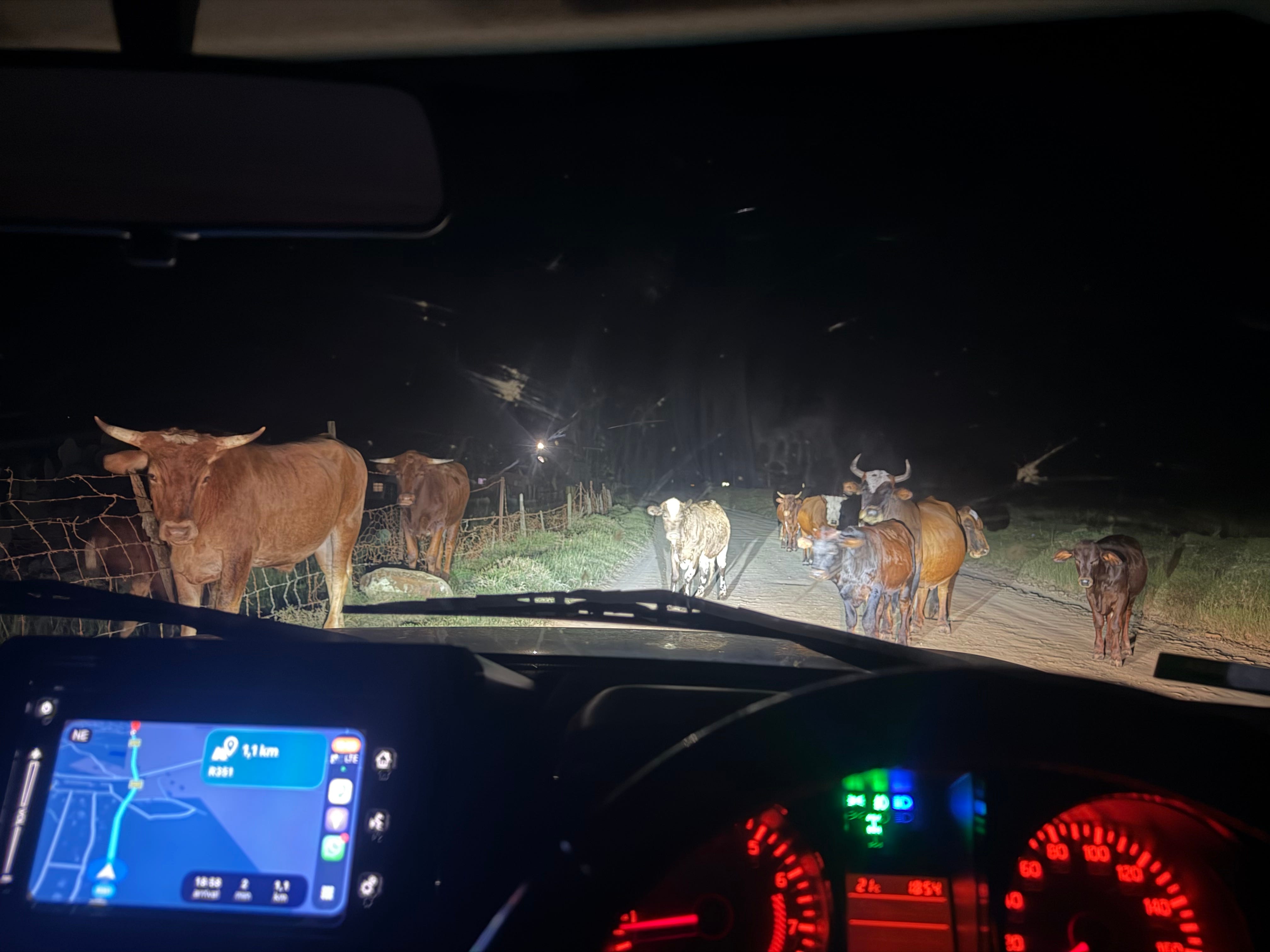
After a day of driving I reach a dirt road. Thin cattle block the way, their bones showing through their skin. At the end of the road, Asenathi is waiting for me. He looks exhausted.
We wait outside Asenathi’s house. Inside I hear a male voice thundering. That’s the preacher, Asenathi explains. Those inside don’t seem disturbed by his aggression. They respond to his sermon with hmmms, amens, and hallelujahs. I ask Asenathi why the preacher sounds so angry. “He’s not angry,” he says. “He uses aggression in his voice to make us feel the force of the afterlife.”
When it goes quiet we’re allowed inside. All eyes look at me. I shuffle next to Henry and Lana. They arrived an hour earlier. “Now you must say something,” says Asenathi. I murmur something about being honoured to be there, despite the tragic occasion. Then everyone starts singing and dancing. Even the youngest children dance along. I feel stiff as a board, but sitting still is much more uncomfortable than awkwardly joining in.
When it goes quiet again I introduce myself to everyone. Not that my name matters. Umlungu does the job. “Here we never see a white man,” says Andile, Asenathi’s uncle. “It means a lot that you are here.” We sit in a circle. I’m given bread and some organ meat I can’t identify. While I eat I learn about Somoleze. His name means “We give thanks.” He was only 22. He was a gentle boy who looked after others. Nobody knows why he took his life.
In the morning we're woken up to chop wood. No gas or coal here. In recent years the walk to the trees has grown longer and longer, Asenathi tells me. Somoleze's mother prepares breakfast for us. She's technically Asenathi's aunt, but close enough in age that she feels like his big sister. I'm surprised to hear her laugh, but then I remember when Floor passed, there sometimes was laughter in our house too.
After breakfast we change clothes for the service. Henry and I are asked to help carry the coffin. The service takes place under a tent that provides welcome shade and is led by a female preacher. She too addresses those present in a thundering voice, but between prayers she accompanies the lively music with her referee’s whistle. Henry takes photos and everyone takes photos of us.
Then Asenathi comes to me and asks if I’d like to say something. I murmur something about life being a gift from God and that I wish Somoleze could have seen how loved he was. I hear some hmmms, amens and hallelujahs.
After the service we all walk to the cemetery, on a beautiful slope just outside the village. The women stop a few hundred meters from the grave and stay behind to sing. In the case of a suicide, they’re not allowed to be present when the body descends into the grave.
Once Somoleze has been lowered, we fill the grave back in. It’s hard work and we take turns. There’s a lot of laughter now. When we’re done, the gravestone is placed. It reads: Somoleze Muleka. Born: 2004-08-18; Died: 2026-04-02; Buried: 2026-04-18. Next to it, an advertisement for Ngqonqoshe Funeral Parlour.
After the funeral I’m exhausted. I want to get back to Cape Town, but apparently that’s not how it works. “Tomorrow we will kill a sheep and eat it,” says Asenathi. “Only then we can go.” Henry and Lana really do need to leave, so I decide to stay behind alone. The next morning the sheep’s throat is cut without much ceremony. An hour later I’m tearing a piece of mutton off a bone with my teeth. I wash it down with a sip of Ricoffy, the chicory-based coffee substitute found in every corner shop in Africa.
Around noon I ask Asenathi when we can leave. “Just a few more hours,” he says. But I have to go. The drive to Cape Town is at least twelve hours and I need to be back at work the next day. Asenathi understands, but really has to stay. He asks me to take his mother, nephew, sister, and her two children with me. Twenty minutes later they’re all in the three-door Suzuki Jimny, our bags on the roof.
The drive is fairly quiet. We’re too tired to bridge the cultural divide, but the soft clicking of isiXhosa in the back seat sounds familiar, and as we drive through the Karoo we all sing along to Lauryn Hill. For hours we drive through arid grassland with nothing but sheep and springbok. Sometimes we go well over an hour without a single oncoming car. Every now and then we pass a man walking along the road, seemingly traveling from nowhere to nowhere.
It’s past midnight when we drive into Masi. We embrace each other when we say goodbye.
I want to drive on to Cape Town but then realize I have no place to sleep there. On Booking.com I find a B&B in Fish Hoek that’s still open.
Originally published at the source. Subscribe for new stories.