Five Nights in Makuleke
28 juni 2026
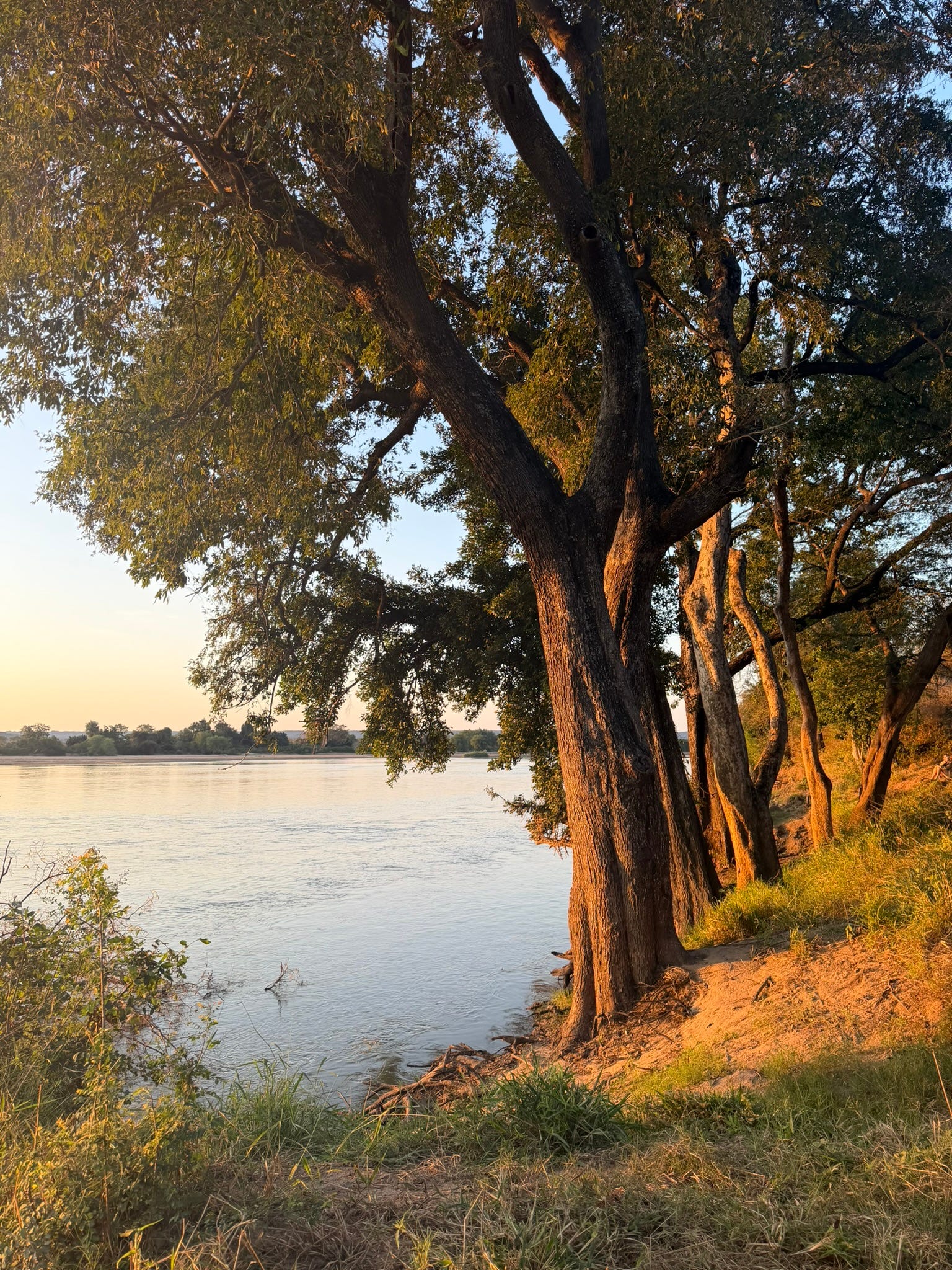
I am back in Makuleke. A land of immense beauty, but also a harsh and indifferent land. It has always slightly intimidated me.
I am guiding this trail along with Ian and Jasmin. I met Ian a couple of months ago and when he told me that he was guiding a trail in Makuleke this week, I asked him if I could join him. It turned out he could use another guide, as he would be assessing Jasmin for her lead trails and would therefore be walking from the back.
Thanks for reading The Long Way! Subscribe for free to receive new posts and support my work.
We meet our guests at the gate. Two 19-year-old South African boys, a 34-year-old German, and two Americans, one in his late 40s and one in his mid-70s. I’m instantly worried when I see the old man. He looks frail and he trembles when he speaks.
The first day we only walk a short distance to a spring where we spend the night. That first night I am still finding my feet. The soil is muddy, the air is thick with mosquitoes and there are no trees to block the dew. I wake in the middle of the night with my sleeping bag soaked. I move around and my jacket, which I use as my pillow, falls in the stream below me. I fish it out with my stick but it is now soaked and covered in mud.
I enjoy my watch, though. I always do. I keep the small fire going and occasionally shine around with my torch. In my notebook I write page after page. Words come easier here.
The next day we walk through the mopane, across the floodplain to the Limpopo. We break at a small pan. Dozens of White-faced duck fly up as we approach. Open-billed storks and darters are perched in the trees. A spoonbill wades in the shallows, sweeping its bill back and forth to stir up mud and trap its prey. A Black eagle glides above the sandstone kopje. Hyraxes alarm call.
We continue across the floodplain. The hooves of hundreds of buffalo have left deep holes in the mud, which by now are baked hard by the sun. The last stretch to the river is across a field of wild sage. The smell is a warm embrace. The river welcomes us.
Once we have made camp, I sit on the bank of the Limpopo, beneath a tall jackal berry. Across the river lies Zimbabwe. A Pied kingfisher hovers above the flowing water, dives, and re-emerges with a small fish.
Just before darkness falls, an elephant approaches the river. We watch him walk across the wild sage. He has recently bathed in mud and his dark skin stands out against the lime-yellow of the fever trees. He smells us and hesitates. With his tail erect, he circles a couple of times. We decide to give him space.
The stress of the past weeks is fading. Here, everything is immediate: a pair of eyes lighting up in the night, a branch cracking. A delayed refit feels distant now.
At dawn we cross the floodplain again. We are now heading south, into the harsh basalt ridges, with its thick mopane forest. Walking up the hills the going is tough. Rocks roll under our feet and with all the weight on our backs it is easy to lose balance.
The terrain takes its toll. During a break, the old man faints and falls head-first on a rock. I rush towards him and turn him on his back. He’s breathing. Above his left eye, a wound pouring blood. When he opens his eyes he asks me who I am. It is clear he cannot continue. We radio camp and walk him out to the nearest road, where a Land Cruiser picks him up. I feel for him but I am also relieved.
We arrive at our sleeping spot. An open place next to a spring, underneath ancient leadwoods with trunks like crocodile skin.
At the spring a pair of painted snipe burst up. I take my dirty, smoky clothes off and bathe, scooping cup after cup of cold water over myself.
In the morning I lead the group further up the slope, through the mopane. Step after step, pressing our weight up against the black boulders. We push through thick vegetation. My legs and arms are bleeding. With every scratch I earn my place in this landscape.
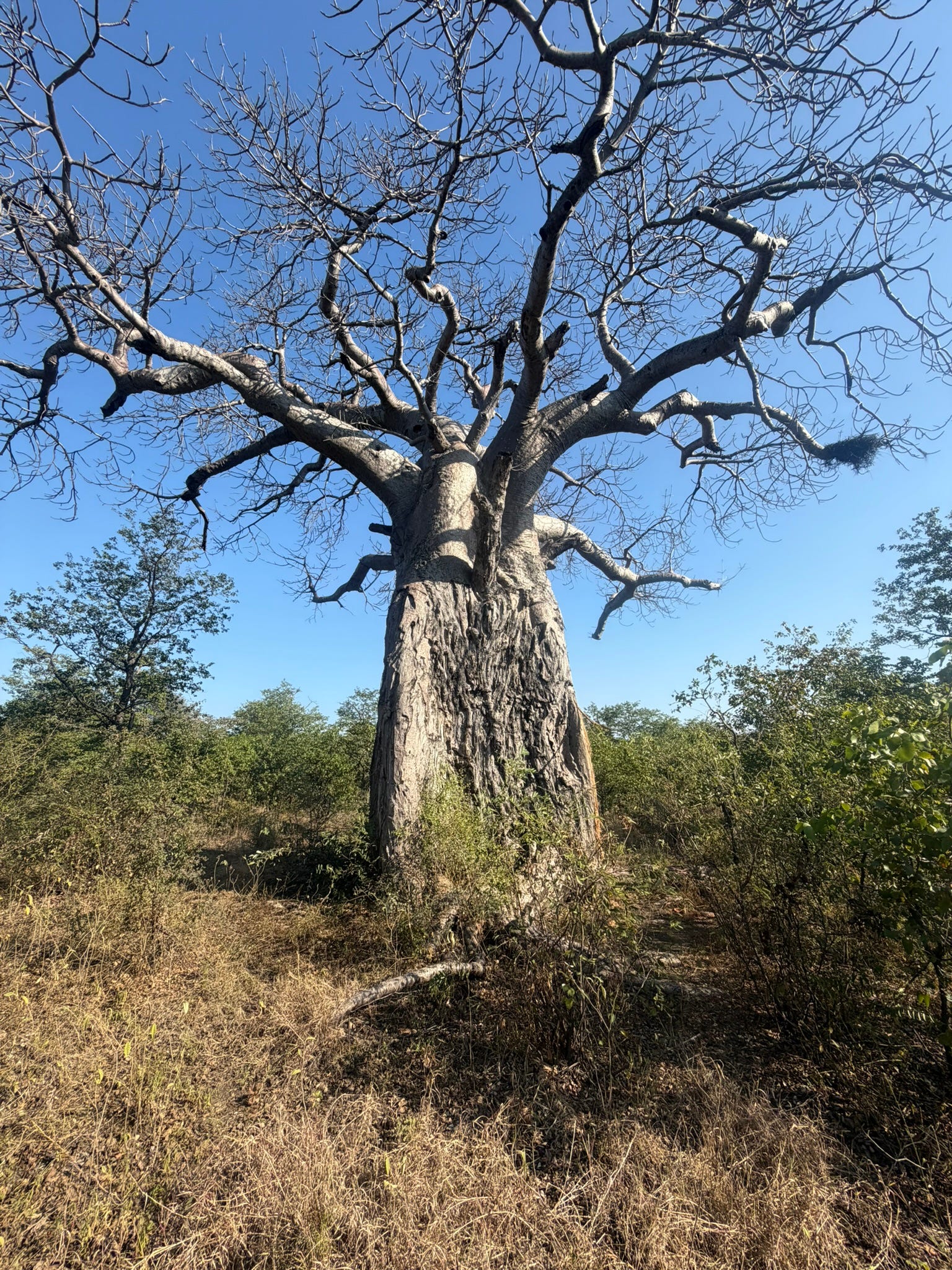
Suddenly, a clearing opens. In it stands a majestic baobab. She must be thousands of years old. Standing beneath her I feel a deep, maternal wisdom. She has seen it all. She was old when the Mapungubwe ruled here; ancient when the first white face gazed up at her. Now, as she gazes down at me, she looks straight through me.
We reach the top of the ridge. From here we can look down into the Levuvhu valley. We make some coffee and take in the view.
We start our descent. Be careful now, I think. One loose rock and I’m gone. Makuleke is indifferent.
Makuleke is indifferent, but sometimes she hands out incredible gifts. At Mashashiti springs, cold, clean water runs down the rocks. I drink cup after cup and pour some over my head.
I lie down in the shade of a big Nyala tree. With my eyes closed I hear the cascading song of a tchagra. With it I tumble into a deep sleep.
I am woken when it’s time to continue. We follow the Mashashiti drainage line down to the floodplains of the Levuvhu. Down the slope, where the stream has deposited her clay, acacias thrive.
The cliffs on our flanks open up and we find ourselves on the floodplain, the cliffs of the opposite bank ahead of us.
In the feverberries, oxpeckers call. Buffalo? No. Eland. They watch us from a distance, then run. They’ve shared this landscape with us long enough to learn what we are.
An elephant bull appears in front of us. He also knows what we are, but he is not concerned. He strides towards us and we get out of his way.
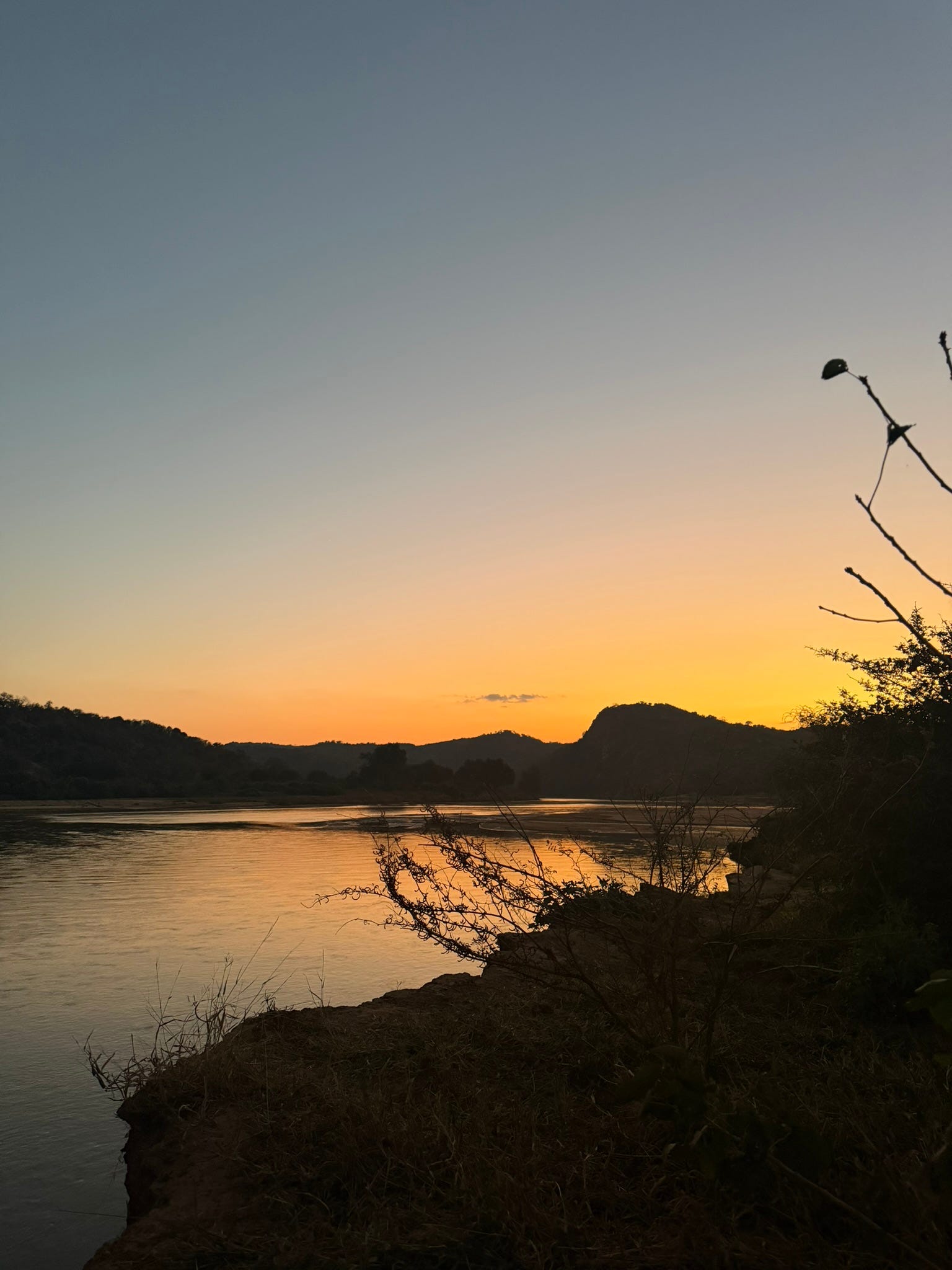
We reach our sleeping spot. I sit on the bank of the Levuvhu and watch elephants wading through the river. From the cliffs above the opposite bank, baboons are alarm calling. WAH! WAH! The sound echoes through the valley.
The next morning we walk through Hutwini Gorge. Steep cliffs flank our path. This is a one-way street. Face a herd of buffalo here, and the only option is to drop your bag and climb. Luckily there is no oncoming traffic.
Hutwini leads us back up the basalt ridge and into the mopane. This is the toughest part yet. We almost run out of water. One of the guests feels light-headed and the others take turns carrying his bag.
We find water in a muddy spring. Not perfect, but with a few purification tablets it’s drinkable.
We follow a drainage line down to the Limpopo floodplain, along a stream flanked by leadwoods and baobabs. When we reach the floodplain, a herd of buffalo greets us.
We sleep out on the plain. During my final watch I struggle to keep the reluctant fire going. Not far away an elephant pushes down a tree. A nightjar calls. Hyaenas laugh hysterically.
That night is cold and I don’t sleep much, but I am intensely happy.
Thanks for reading The Long Way! Subscribe for free to receive new posts and support my work.
Originally published at the source. Subscribe for new stories.