The ship of Theseus
27 januari 2026
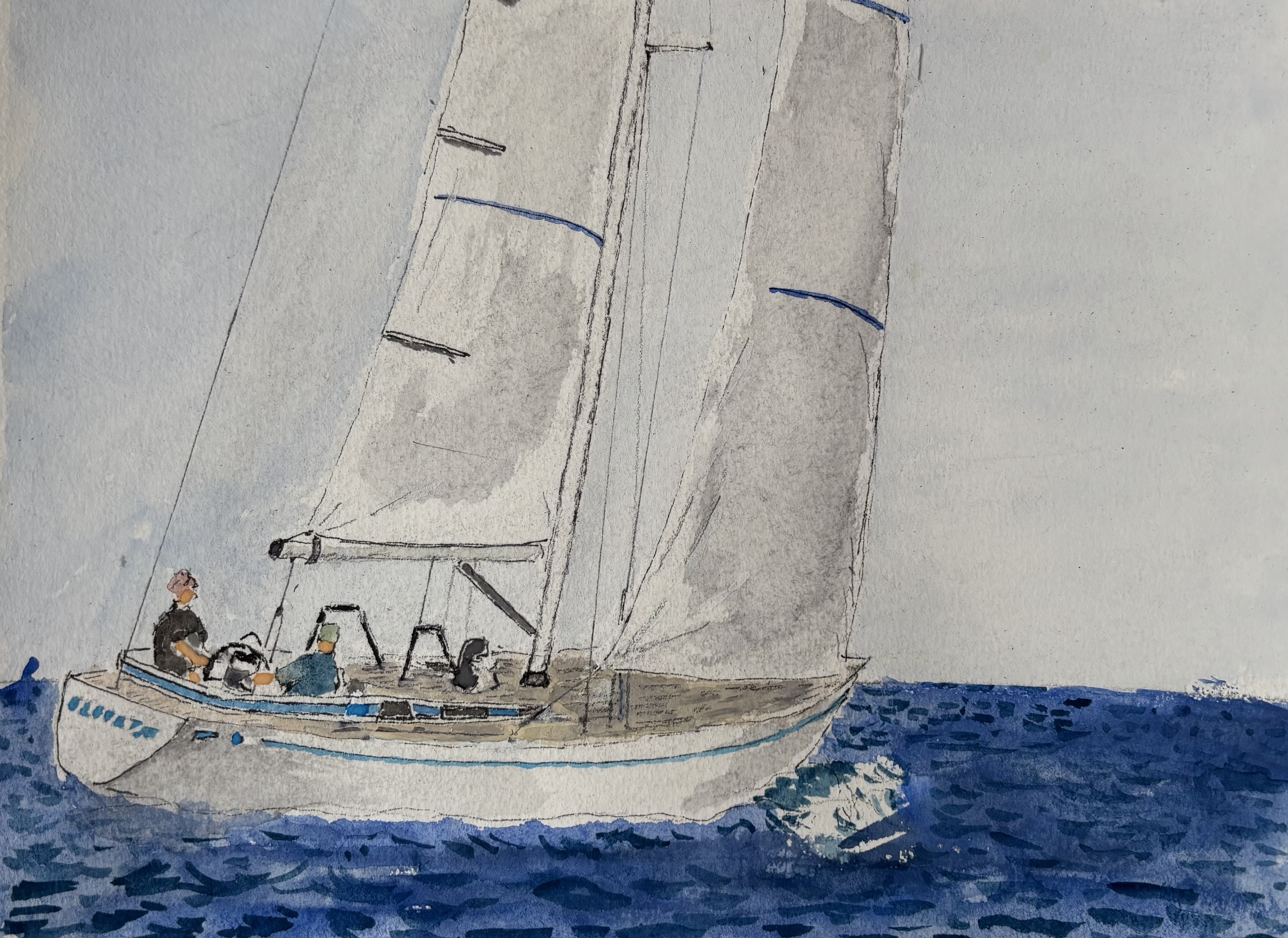
The restoration of an old boat always begins with destruction. The first step is to pull everything apart. Old wiring, hardened rubber, corroded metal - all of it has to come out. Depending on the age and condition of the vessel, one must go further. Rigging, beams, bulkheads - if the rot runs deep, the very skeleton of the boat has to be removed, until but a hollow shell remains. Only then can the rebuilding begin.
Last year, as Floortje remained on the hard, I found myself in a similar state. The end of a relationship, followed by a wave of delayed grief, exposed cracks in the timber that no amount of varnish could hide.
Thanks for reading! Subscribe for free to receive new posts and support my work.
What followed were some of the most painful - and valuable - months of my life. With Maud’s help, I opened compartments long left untouched. We examined my internal structure: how it bears load, endures sustained stress, where it flexes, and where, if pushed long enough, it breaks. In time, I came to better understand myself.
“You are such a rational person,” Maud said one day, “that you expect to solve every problem with your brain alone. It’s as if you own a toolbox with only a hammer. You can get quite far with a hammer: you can drive a nail into a wall, even force in a screw if you try hard enough. But eventually you’ll encounter a problem that requires more than just that one tool. What you need is an emotional toolbox. And for that, you have to let your feelings in.”
Creating that toolbox was easier said than done. But, as with boats, I came to see that there is beauty not just in the end result, but in the restoration itself. Through writing and painting, I shed emotional ballast and scraped away years of accumulated fouling. Without the excess weight and drag, I began to feel lighter. Gradually, my attention turned seaward again. It was time to ask myself where I would go next.
The answer came in August. Together with Vaughn and Okwa, mentors who will return in these stories, I was guiding a wilderness trail in the Okavango Delta, Botswana. For a week, we trekked through the Delta on foot and by mokoro, moving slowly through the landscape. The long days on the move created mental space. I thrived in the absence of distraction, the overwhelming natural beauty, and the edge one gets from sensing one’s vulnerability. I realised that this experience was not so different from crossing an ocean. It is the same combination of disconnection, wilderness, and exposure to the environment that gives offshore sailing its depth.
As the days passed, it became clear to me that this would not just be a side project. I had always known I wanted to work in and with nature, but somewhere along the way I had lost sight of that. Now, equipped with my new toolbox, I was finally able to listen when my feelings told me that this was it.
One night, sitting by the fire on watch, it all clicked. I grabbed my pen and notebook and started writing frantically. I would move to South Africa and spend the winters in the bush, guiding primitive walking safaris. The summers I would spend at sea, heading west across the South Atlantic, to South America and back, or east, across the Indian Ocean towards Australia, New Zealand and the Horn. The goal: to expose people to true wilderness, both on land and at sea - for the benefit of those people and the wilderness itself.
Shining bright above me, the Southern Cross seemed the perfect symbol for this new venture. Marking true south, the constellation has offered reliable navigation to travellers on land and sea for thousands of years. It also represented a deeper form of orientation: away from the noise of modern life, these journeys would offer space to reflect and find new direction. And finally, with my own refit completed, it was I who needed to sail south.
Ever since the ship of Theseus, philosophers have debated whether a ship that has had all its parts replaced can still be considered the same vessel. I don’t know the answer to that, but what I do know is that come September, when I leave the Dutch shoreline aboard Floortje, our course due south, we will be stronger, more seaworthy, and better trimmed than ever before.
Thanks for reading! Subscribe for free to receive new posts and support my work.
Originally published at the source. Subscribe for new stories.